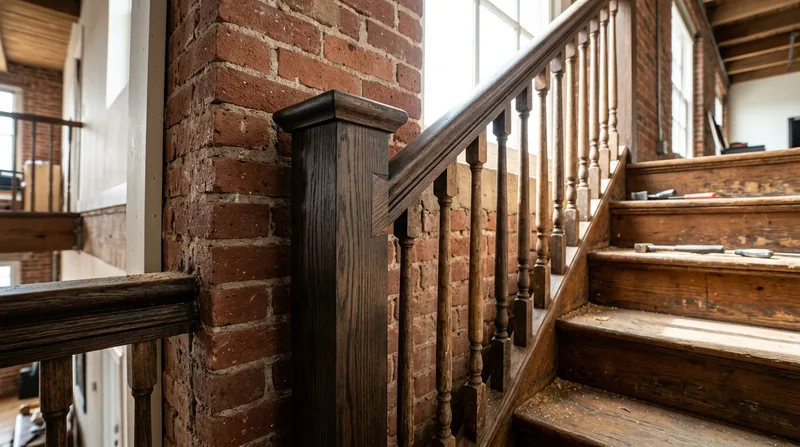




Stair & Railing Repair in Kansas City addresses the wear that comes with everyday use, freeze-thaw cycles, and the settling that affects older homes across the metro. Whether your staircase creaks underfoot, your banister moves when you grip it, or your stringers show signs of rot from Kansas City's humid summers and spring thaw cycles, the problem compounds over time. A loose tread becomes a safety issue; wood decay spreads. We repair and rebuild residential stairs, restore period railings in historic Craftsman bungalows and Tudor Revival homes, and install code-compliant handrails and attic ladders. Our work keeps your stairs functional and safe without unnecessary replacement.
Why Stair & Railing Repair Matters in Kansas City Homes
Kansas City's climate and building stock create specific stair failures. Freeze-thaw cycles heave foundations and shift framing every spring; that movement works through stringers and treads. Humidity in summer, especially in basements and crawlspaces, promotes wood decay. Older homes in the Country Club District, Northeast Kansas City, Brookside, and Waldo often have original wood stairs that have carried three or four generations of foot traffic. Newer subdivisions in the southern and eastern suburbs have stairs built faster, sometimes with less robust joinery. All of it wears.
- We tighten loose treads and risers that move or squeak under weight.
- We repair or replace stringers damaged by wood rot, termite activity, or structural settling.
- We restore and rebuild balusters, newel posts, and period railings in historic homes.
- We install new handrails and code-compliant safety railings where required.
- We fit attic ladders and folding stair units for tight spaces.
A staircase that moves or shows decay is not safe to ignore. Early repair costs far less than rebuilding after the wood fails.
Key info: Stair alterations and new handrail installations often require a permit in Kansas City. The local building department sets code for handrail height, baluster spacing (typically 4 inches or less), and load requirements. We work with your permit and can help explain what the inspector will check.
For detailed code guidance, see the Kansas City Building Development Services website.
How We Repair and Rebuild Stairs in Kansas City
Our process starts with a close look at what's failing. A loose tread might need only new fasteners and blocking underneath; a rotted stringer needs structural repair or replacement. We assess the wood species (oak, elm, Douglas fir, or softwood pine), the extent of damage, and whether the stair can be safely repaired or must be rebuilt. We explain what we find and what the honest fix is, not what sells the biggest job.
- We inspect treads, risers, stringers, and railings for movement, rot, or structural weakness.
- We tighten or replace fasteners, add blocking, and reinforce joinery where treads meet stringers.
- We repair or sister damaged stringers with new wood, matching grain and finish where visible.
- We refinish treads and restore railings to match the home's period or existing trim.
- We install new handrails, balusters, and newel posts to code and to your design.
- We handle the permit application and coordinate inspection if required.
The job takes anywhere from a day for tightening and minor repair to a week or more for a full stringer replacement or custom railing restoration. We work around your schedule and keep the stairs usable as much as possible.
Local example: A Craftsman bungalow in the Country Club District had original oak stairs with loose treads and a wobbling newel post. The stringers were sound, the joinery just needed reinforcement. We added blocking under each tread, reset and shimmed the newel, and restored the original finish. Cost was far less than a rebuild, and the stairs now feel as solid as they should.
For other carpentry repairs in your home, see our Finish & Trim Carpentry page, which covers interior work from door trim to custom details.
Stair & Railing Repair Methods and Approaches
| Approach | Description | Best for |
|---|---|---|
| Tread and Riser Tightening | Remove squeaks and movement by adding blocking, resetting fasteners, and shimming joints. No wood replacement needed. | Squeaky or slightly loose stairs with sound structural wood underneath. |
| Stringer Repair and Sistering | Reinforce a damaged stringer by bolting new wood alongside it, matching the grain and finish. Preserves the original stair profile. | Partial rot or structural weakness in one stringer; original wood is worth keeping. |
| Stringer Replacement | Remove and rebuild one or both stringers with new pressure-treated or solid hardwood, maintaining the stair rise and run. | Extensive rot, termite damage, or structural failure; repair is not safe or lasting. |
| Railing and Baluster Restoration | Repair or replace balusters, newel posts, and handrails. Refinish to match the home's period or existing trim. Meet current code spacing and load. | Historic railings, loose or split balusters, or new code-compliant handrails. |
| Handrail Installation | Install new wood or metal handrails at the correct height and load rating, with proper blocking and fastening into framing. | Stairs lacking a handrail, or upgrading to meet current code for safety or accessibility. |
Stair & Railing Repair Cost in Kansas City: What to Expect
Stair repair in Kansas City starts at around $600 for straightforward tightening and tread reinforcement on a single flight. A full stringer repair or replacement, depending on wood species, damage extent, and access, typically runs from $1,500 to $3,500. A complete stair rebuild with new stringers, treads, and railings can reach $5,000 to $8,000 or more. Railing and baluster work starts around $400 per linear foot for new or restored railings with custom finishing.
Several factors move the cost up or down. The extent of wood decay determines whether you can repair or must replace. Stringer accessibility matters: a basement or crawlspace stair is easier to work under than one in a finished room. Wood species and finish affect time and materials; matching original oak or elm takes longer than installing new pine. Permit requirements add a few hundred dollars for inspection and paperwork. Custom railings in historic homes, especially in the Country Club District or Brookside, cost more because of scribing, period-correct joinery, and finish work.
Get two or three estimates before you decide. Each contractor will see the damage differently and propose different solutions. A good estimate explains what's being repaired, what's being replaced, and why. For a detailed pricing overview across our services, visit our pricing page.
Stair & Railing Repair Near Me: What Kansas City Homeowners Should Know When Hiring
Choosing a carpenter for stair work means finding someone who knows wood, respects your home's age and style, and explains the repair honestly. A staircase is structural and visible; it affects both safety and how your home feels. Here's what to look for when hiring a contractor near Kansas City.
- Verify that the contractor is fully insured and carries liability and worker's compensation coverage.
- Ask for references from recent stair or railing projects, especially in homes similar to yours (historic, newer subdivision, rental property).
- Check whether the contractor has experience with permits and inspections for stair alterations in Kansas City.
- Request a written estimate that breaks down materials, labor, and any permit fees.
- Confirm that the contractor explains why a repair or replacement is being proposed, not just the cost.
- Ask about the timeline and whether the stairs will remain usable during the work.
If your home is in a historic district or subject to HOA rules, confirm that the contractor understands those restrictions before starting. A permit may be required for stair alterations; the contractor should handle that coordination with the building department.
Ready to get started? Contact us for a free estimate. We respond within 24 hours and can discuss your stair or railing issue in detail at (816) 608-8526.
Stair & Railing Repair in Kansas City: Pricing Guide
| Service | Price | Details |
|---|---|---|
| Tread Tightening & Minor Reinforcement | Starting at $600 | Squeaks and minor movement fixed with fasteners, blocking, and shimming; no wood replacement. |
| Stringer Repair or Sistering | Starting at $1,500 | Partial rot or structural weakness repaired by reinforcing with new wood; original stringer preserved where possible. |
| Stringer Replacement | Starting at $2,500 | Full removal and rebuild of one or both stringers; cost varies by wood species, damage extent, and accessibility. |
| Railing & Baluster Work | Starting at $400 per linear foot | New or restored railings, balusters, newel posts, and handrails; custom finishing and period matching add time and cost. |
| Permit & Inspection | Included or $200-$400 | Stair alterations often require a Kansas City building permit; we handle application and coordinate with the inspector. |
| Estimate | Free | On-site assessment and written proposal within 24 hours; no obligation to book work with us. |
Indicative pricing, the exact cost depends on square footage, finish, and site access. Free personalized estimate within 24h at (816) 608-8526.


