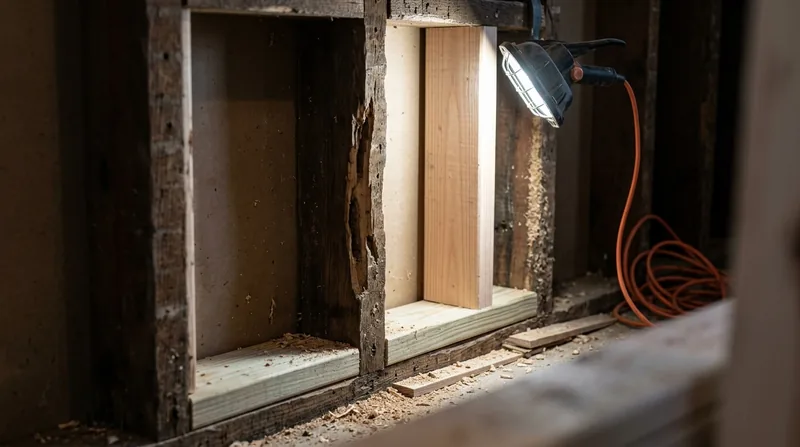




Termites leave Kansas City homeowners with a difficult choice: after the pest inspector confirms the infestation and the exterminator finishes treatment, the structural damage to your wood framing remains. Whether it is a termite damage repair in the sill plate of a 1920s Craftsman bungalow in the Country Club District, a compromised rim joist in a Brookside brick colonial, or eaten-through studs in a Northeast frame cottage, the wood must be replaced to restore full structural integrity. We remove termite-damaged studs, sills, trim, subfloor sections, and rim joists across Kansas City and the surrounding suburbs, working from your pest inspection report and restoring the frame to safe, durable condition. This is not pest control, fumigation, or treatment. This is the carpentry work that comes after: honest, methodical wood replacement that puts your home back in order.
Why Termite Damage Repair Matters in Kansas City's Older Housing Stock
Kansas City's residential neighborhoods span more than a century of building. The historic Country Club District, Pendleton Heights, Scarritt Renaissance, Brookside, and Waldo all feature wood-frame construction that termites find hospitable, especially during the region's humid summers when moisture levels rise and wood stays damp longer. Termites work quietly inside walls and joists for months or years before a pest inspection reveals the damage. By then, studs may be hollowed out, sill plates compromised, or subfloor sections weakened enough to cause sagging or soft spots in finished flooring. Waiting to address this damage compounds the problem: water continues to infiltrate, wood rot may develop alongside termite galleries, and structural members lose load-bearing capacity.
- We replace hollowed studs in wall framing to restore vertical load capacity and prevent settling.
- We remove and sister damaged floor joists with new pressure-treated lumber, restoring bounce and safety to sagging floors.
- We cut out compromised sill plates and rim joists, sistering new pressure-treated sections to the foundation and band board.
- We replace subfloor sections that termites have eaten through, ensuring a solid base for finish flooring and even weight distribution.
- We repair or replace exterior trim, fascia, and soffit members that termites have damaged, preventing further water entry and pest access.
Each repair restores the structural integrity that termite galleries have compromised, so your home stands on a sound frame again.
Key info: Kansas City's freeze-thaw cycles and the region's humid summers create conditions where moisture accumulates in wood, making it more susceptible to both termite attack and the secondary wood rot that often follows. Addressing termite damage promptly prevents this compounding damage and keeps repair costs from escalating.
For more on the wood rot that often accompanies termite damage, see our wood rot and dry rot repair service.
How We Approach Termite Damage Repair in Kansas City Homes
Our process starts with your pest inspection report. We do not treat, fumigate, or assess infestation. We read the inspector's findings, identify every wood member that shows termite damage, and plan the replacement work. For each damaged section, we assess whether the member can be repaired by sistering (bolting a new piece alongside the old) or must be replaced entirely. We then remove the damaged wood, install new pressure-treated lumber where needed, and restore the structural member to full load-bearing capacity. This is methodical work that takes time and attention, not a quick cosmetic patch.
- We obtain your pest inspection report and walk the damage with you to confirm scope.
- We determine which repairs require a permit and coordinate with the Kansas City building department or your local jurisdiction before work begins.
- We remove termite-damaged wood carefully, supporting the structure above as needed to prevent settling or cracking.
- We install new pressure-treated lumber, fastening it securely with galvanized hardware to prevent future moisture entry and pest access.
- We restore trim, casing, and exterior members to match the original profile and finish of your home.
- We document all work with photographs and notes, which you can submit to your insurance carrier if you file a claim.
This step-by-step approach ensures that the repair is complete, that no damage is overlooked, and that your home's frame is as sound after our work as it was before the infestation.
Example: A homeowner in Independence discovered termite damage in the rim joist and two floor joists under her 1950s ranch kitchen. We sistered new pressure-treated joists to the existing members, replaced the rim joist section, and installed new blocking to restore the floor. The work took three days, required a structural permit from the City of Independence, and cost $2,800. The homeowner submitted our documentation to her insurance company and recovered a portion of the cost after her deductible.
For more on floor joist and subfloor repair, see our floor joist and subfloor repair service.
Repair Methods for Termite Damage
| Approach | Description | Best for |
|---|---|---|
| Sistering | Bolt a new pressure-treated member alongside the damaged joist or stud, creating a doubled beam that carries the load. | Floor joists, rim joists, and studs where the wood is partially compromised but the structure above is sound. |
| Full Replacement | Remove the entire damaged member and install new pressure-treated lumber, fastened to existing framing with galvanized bolts and nails. | Sill plates, studs, or joists where termite damage is severe or the member is inaccessible for sistering. |
| Subfloor Section Removal | Cut out the damaged subfloor, inspect joists below, repair or sister those members, and install new subfloor to match the existing thickness and span. | Kitchen or bathroom subfloor with localized termite damage above joists that can be repaired by sistering. |
| Exterior Trim Replacement | Remove termite-damaged fascia, soffit, or trim boards and install new redwood or pressure-treated lumber, primed and finished to match. | Eaves, gable ends, and window trim where termites have entered from the exterior and wood is exposed to weather. |
Termite Damage Repair Cost in Kansas City: What to Expect
Termite damage repair in Kansas City typically starts at $1,200 for a localized repair, such as sistering a single floor joist or replacing a short section of rim joist in a basement. From there, cost scales with the extent of the damage, the location of the affected wood, and whether the repair requires a structural permit. A kitchen with damage to two joists and subfloor sections may run $2,500 to $3,800. A full sill plate replacement around a basement perimeter can exceed $5,000. Access matters: if the damaged wood is in a crawlspace or behind finished walls, removal and replacement take longer. Species and lumber availability also factor in; pressure-treated lumber costs more than standard framing lumber but resists future termite attack and rot.
The best way to understand your actual cost is to have a carpenter walk the damage with you, measure the affected members, and provide a written estimate. We recommend getting two or three estimates so you can compare scope, materials, and timeline. Once you know what needs to be done, you can decide whether to file an insurance claim, get a loan, or phase the work. Many homeowners find that addressing termite damage promptly, rather than waiting, keeps costs lower because secondary damage does not have time to develop.
For a full breakdown of our pricing across all services, visit our pricing overview.
What to Look for When Hiring a Carpentry Contractor Near Me in Kansas City
Finding a reliable carpenter for termite damage repair in Kansas City means looking beyond the first estimate you receive. A good contractor will ask to see your pest inspection report, walk the damage in person, explain what wood needs to be repaired or replaced, and tell you whether a permit is required. They will be fully insured and able to provide proof of coverage. They will give you a written estimate that breaks down materials, labor, and timeline. They will also explain why they recommend repair over replacement, or replacement over repair, based on what the wood actually shows. Be wary of contractors who promise quick fixes, offer to waive deductibles, or claim they can eliminate an infestation. Pest treatment and structural repair are separate trades, and the carpenter's job ends with the wood.
Ask for references from recent termite damage jobs in Kansas City, Lee's Summit, Raytown, or other local suburbs. Check whether the contractor has worked with the Kansas City building department on permits and understands the approval process. If your home is in a historic district or subject to HOA rules, confirm that the contractor can match the original profile of trim and exterior members. Finally, get a sense of how the contractor communicates. Termite damage repair often uncovers secondary damage or complications once work begins. A contractor who explains problems clearly and discusses solutions with you before changing scope is worth the investment.
When you are ready to move forward, contact us for a free estimate. We respond within 24 hours and can schedule a walk in Kansas City and the surrounding areas at a time that works for you.
Termite Damage Repair in Kansas City: Pricing Guide
| Service | Price | Details |
|---|---|---|
| Single joist or stud repair | Starting at $1,200 | Sistering one floor joist or replacing one wall stud, including labor, pressure-treated lumber, and fasteners |
| Rim joist or sill plate section | Starting at $1,800 | Replacing a section of rim joist or sill plate up to 8 feet, including removal, new pressure-treated lumber, and fastening |
| Multiple joists and subfloor section | Starting at $2,800 | Sistering two or more joists, replacing subfloor, and restoring finish flooring above, varies by extent and access |
| Full perimeter or complex repair | On estimate | Sill plate replacement around basement, multiple structural members, or repairs requiring engineering review need site assessment |
| Travel and estimate | Free | No charge for estimate or travel within Kansas City and surrounding suburbs, response within 24 hours at (816) 608-8526 |
Indicative pricing, the exact cost depends on square footage, finish, and site access. Free personalized estimate within 24h at (816) 608-8526.


