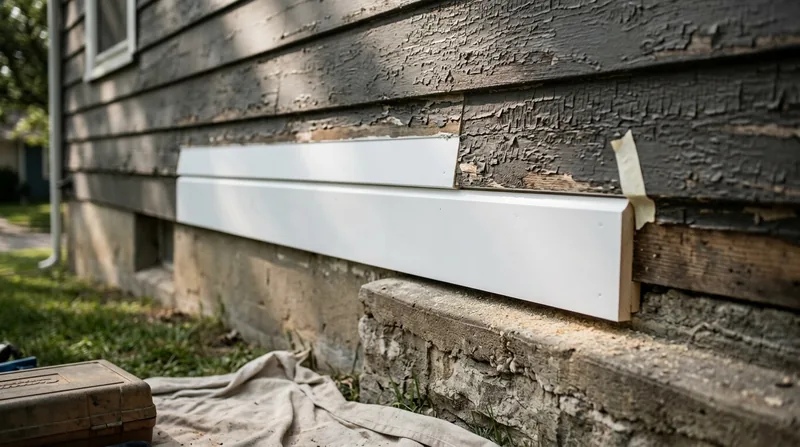




Wood rot and dry rot repair in Kansas City is a permanent fix for one of the Midwest's most persistent wood-frame problems. Kansas City's humid summers and freeze-thaw winters create ideal conditions for decay in siding, trim, floor joists, and structural framing. Water penetrates wood during rain and snowmelt, freezes in winter, and thaws in spring, opening cracks that invite fungal growth. We cut out decayed wood, treat the surrounding framing, and rebuild with rot-resistant lumber. This is a structural repair, not a cosmetic patch, and it stops the decay permanently.
Why Wood Rot and Dry Rot Repair Matters in Kansas City's Freeze-Thaw Climate
Kansas City's continental Great Plains climate drives wood decay faster than most regions. Freeze-thaw cycles heave foundations and crack framing every spring. Moisture trapped in wall cavities, under siding, and around floor joists freezes and thaws repeatedly, breaking down wood fiber and opening pathways for fungal colonization. Historic homes in the Country Club District, Pendleton Heights, and Brookside show decay in their original framing and exterior trim within 80 to 100 years. Newer homes in subdivisions across Lee's Summit, Blue Springs, and Raytown are not immune; poor grading, damaged gutters, and construction moisture accelerate the process.
- Freeze-thaw cycles crack siding and trim, allowing water to penetrate wood framing.
- Humid summers promote fungal growth in wood already weakened by moisture.
- Decay spreads from trim and siding into structural members like rim joists and floor joists over time.
- Untreated decay compromises the integrity of walls, floors, and exterior envelope.
- Early repair stops the spread and avoids costlier structural replacement later.
Catching and repairing rot early keeps repair costs predictable and preserves sound framing.
Key info: A rotten rim joist or sill plate in a 1920s bungalow in Waldo or a 1950s ranch in Grandview can be cut out and sistered with pressure-treated lumber, a permanent repair that costs far less than replacing the entire wall section. Decay confined to exterior trim or soffit is even more straightforward to address.
For guidance on building code requirements and permits for structural work in Kansas City, the Kansas City Planning and Development Services maintains current standards and can clarify whether your repair will require a permit.
How We Repair Wood Rot and Dry Rot in Kansas City Homes
Our process is straightforward: inspect, cut out decayed wood, treat the surrounding framing to prevent future decay, and rebuild with rot-resistant lumber. We do not use chemical treatments or claim to eliminate infestations; we repair and replace the damaged wood. If your home has a pest inspection report showing termite or other insect damage, we work from that report to replace compromised framing. For details on termite-related wood damage, see our termite damage repair service.
- We inspect the affected area and probe adjacent wood to determine the full extent of decay.
- We cut out all soft, discolored, or spongy wood with hand tools and chisels to preserve sound framing.
- We treat exposed wood with a wood preservative to inhibit fungal growth on remaining framing.
- We install pressure-treated or naturally rot-resistant lumber (such as redwood or Douglas fir heartwood) to match the original member.
- For structural members, we sister new framing alongside existing sound wood using bolts and nails to restore load-bearing capacity.
- We ensure proper drainage and ventilation around the repair to prevent moisture reaccumulation.
The entire repair is structural and permanent, not a temporary seal or surface treatment.
Example: A 1960s split-level in Independence discovers rot in the rim joist where the foundation meets the sill plate. We remove the decayed wood, inspect the sill plate and floor joists, treat the framing, and install a new pressure-treated rim joist bolted to the sill. The repair restores structural integrity and prevents further decay into the floor system. The same approach applies to rotten fascia, soffit, or exterior trim on homes across Kansas City and surrounding areas.
Wood Rot Repair Methods and Approaches
| Approach | Description | Best for |
|---|---|---|
| Localized removal and replacement | Cut out decayed section, treat surrounding wood, install new rot-resistant lumber. | Rot confined to siding, trim, fascia, soffit, or a small section of a structural member. |
| Sistering | Install a new member (joist, rim joist, header) alongside existing sound framing and bolt or nail together. | Decay in a floor joist, rim joist, or header where the original member retains enough capacity to share the load. |
| Full member replacement | Remove the entire decayed member and install a new one, with temporary support as required. | Decay extends through more than 50% of a structural member or the wood is too soft to carry any load. |
| Moisture control and preventive treatment | Repair gutters, improve grading, ventilate cavities, and treat exposed framing with wood preservative. | Areas at high risk for reaccumulation of moisture, such as exterior wall cavities or crawl spaces with poor drainage. |
Wood Rot and Dry Rot Repair Cost in Kansas City: What to Expect
Wood rot repair costs depend on the location, extent, and type of damage. A small section of rotten trim or soffit starts at $650 and reflects the labor to cut out the decay, treat the framing, and install new material. Decay in a rim joist or floor joist runs higher because the member is structural and often requires sistering or full replacement. A rotten sill plate or extensive decay across multiple joists or studs will require an on-site estimate, as the scope and structural implications vary widely.
Factors that move the cost up include the size of the repair area, accessibility (crawl space work is slower than above-grade), the type of lumber needed (pressure-treated standard lumber costs less than naturally rot-resistant species), and whether the repair requires temporary support or bracing of the structure. If a structural engineer is needed to size a replacement member or verify load-bearing capacity, that cost is separate and typically $500 to $1,500 depending on the scope.
We recommend getting 2 to 3 estimates from local carpenters before committing. This gives you a realistic sense of the market and helps you understand what is and is not included in each quote. For a detailed overview of our pricing and the factors that affect estimates, see our full pricing page.
What to Look for When Hiring a Carpentry Contractor Near Me in Kansas City
Not all carpenters approach rot repair the same way. Some contractors patch visible decay with filler and paint; others cut out the rot, treat the framing, and rebuild with sound lumber. You want the latter. When you call a contractor for an estimate, ask how they assess the extent of decay, whether they treat adjacent wood to prevent future growth, and what type of lumber they use for replacement. A contractor who explains the pathology and proposes repair before replacement deserves serious consideration.
Check that the contractor is fully insured and carries general liability and workers compensation coverage. Ask for references from recent jobs in Kansas City, Independence, Blue Springs, or Raytown, and follow up with 2 to 3 homeowners. Confirm that the contractor understands local building codes and will pull a permit if the repair touches a load-bearing member or alters the structure. Some HOAs and historic districts (such as those in the Country Club District or Pendleton Heights) have additional requirements; verify these before work begins.
Call us at (816) 608-8526 for a free, no-obligation estimate. We respond within 24 hours and will walk you through the repair process and cost upfront.
Wood Rot & Dry Rot Repair in Kansas City: Pricing Guide
| Service | Price | Details |
|---|---|---|
| Small trim or soffit rot repair | Starting at $650 | Localized decay in fascia, soffit, or exterior trim; includes removal, treatment, and replacement lumber |
| Rim joist or floor joist repair via sistering | Starting at $1,200 | New pressure-treated member bolted alongside existing sound framing; cost depends on joist length and accessibility |
| Sill plate or extensive structural decay | On estimate | Full member replacement or multi-joist repair requires on-site inspection to determine scope and structural requirements |
| Structural engineer consultation (if needed) | Additional cost | Load-bearing member replacement or wall alteration may require engineered drawings; typically $500 to $1,500 |
| Travel and mobilization | Included | No separate charge for jobs in Kansas City and surrounding service areas within 30 miles |
| Free estimate | No obligation | Response within 24 hours; call (816) 608-8526 to schedule an on-site inspection and detailed quote |
Indicative pricing, the exact cost depends on square footage, finish, and site access. Free personalized estimate within 24h at (816) 608-8526.


