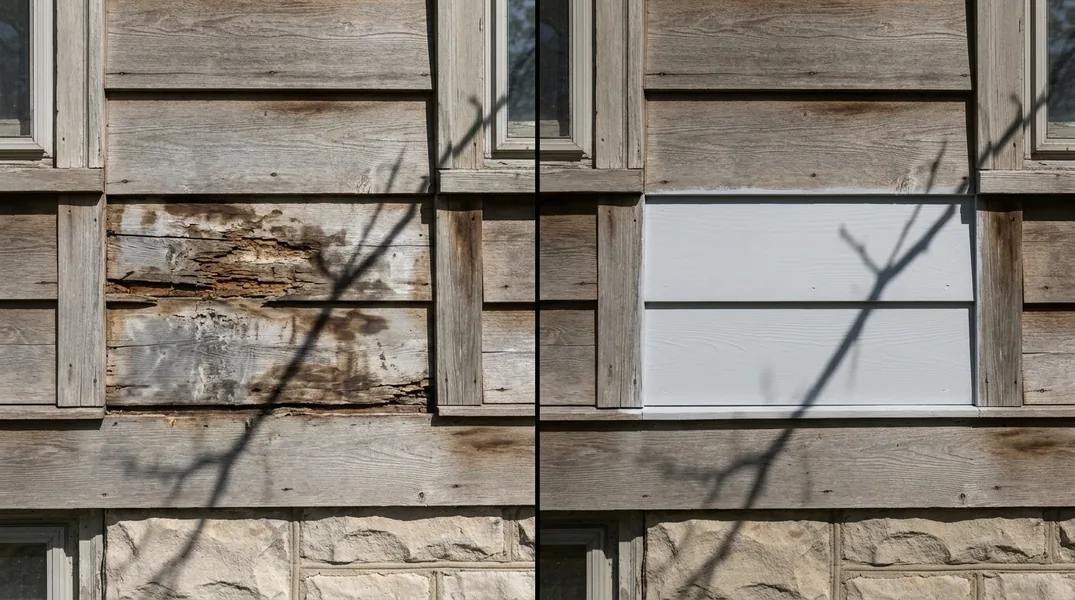
Understanding Dry Rot vs Termite Damage
If you own a home in Kansas City, you've likely heard homeowners worry about wood damage. Two of the most common culprits are dry rot and termites, yet they cause very different types of destruction. Understanding the difference between dry rot vs termite damage is essential because the treatment, urgency, and repair approach are completely different.
Dry rot is a fungal disease that destroys wood from the inside out. It thrives in damp, poorly ventilated areas and can spread rapidly if left unchecked. Termite damage, on the other hand, is caused by living insects that actively consume wood as a food source. While both can compromise your home's structural integrity, the way they damage wood, the speed at which damage occurs, and the solutions required are distinct. Misidentifying the problem could lead to ineffective repairs and continued deterioration.
What Does Wood Rot Look Like: Visual Identification
When examining what does wood rot look like, you'll notice several telltale signs. Dry rot typically appears as wood that has darkened, become brittle, and cracked into cube-like patterns. The wood may feel soft or spongy to the touch, and you might notice a musty, earthy odor in affected areas. Unlike termite damage, dry rot doesn't leave visible tunnels or galleries; instead, it creates a powdery, rust-colored dust as the fungus breaks down the wood fibers.
In Kansas City's humid climate, dry rot is particularly problematic in basements, crawl spaces, and around poorly sealed windows and doors. You may also notice white or gray fungal threads (called mycelium) spreading across the wood surface or nearby materials. The damage is often progressive, meaning it worsens over time if moisture and poor ventilation persist. If you spot these characteristics in your home, it's time to consider Wood Rot & Dry Rot Repair services.
Signs of Termite Damage in Wood: What to Look For
Signs of termite damage in wood are distinctly different from dry rot. Termites create hollow galleries and tunnels through wood as they consume it. If you tap on affected wood, it may sound hollow, and you might see small holes or openings where termites have entered or exited. Unlike dry rot, termite damage often leaves mud tubes on exterior walls or foundation areas, which termites use as highways to travel between their nest and food sources.
Termite-damaged wood typically appears intact on the surface but is hollowed out underneath, creating a papery or honeycomb texture when you probe it. You may also notice discarded termite wings near windowsills, wood shavings, or a faint clicking sound coming from within walls. The damage pattern tends to follow the grain of the wood, and you'll often see a clear line of demarcation between damaged and undamaged areas. If you suspect termite activity, professional Termite Damage Repair is crucial to prevent further infestation and structural compromise.
Key Differences: Dry Rot vs Termite Damage Patterns
The patterns of destruction offer the clearest clues when distinguishing between dry rot vs termite damage. Dry rot spreads in a somewhat random, web-like pattern as the fungus consumes available moisture and nutrients. It's not selective about direction and can move through wood in any direction. The affected wood becomes lighter in color initially, then darkens as the fungus progresses, eventually turning into that characteristic dark, brittle mass.
Termite damage, by contrast, follows a more organized pattern. Subterranean termites, the most common type in the Midwest, typically work along wood grain and create distinct tunnel systems. The damage is often found in a linear fashion, particularly in structural elements like floor joists and support beams. Additionally, dry rot requires moisture to thrive and won't progress in completely dry wood, whereas termites can cause damage in both wet and dry conditions. For homeowners in the region, recognizing these patterns helps determine whether you need Floor Joist & Subfloor Repair or pest control intervention first.
Speed of Damage: How Quickly Does Each Problem Spread
One of the most important practical differences between dry rot and termite damage is the speed of deterioration. Dry rot can spread quite rapidly once conditions are favorable, potentially affecting large areas of wood within months if moisture and poor ventilation persist. However, the damage is localized to areas with moisture problems, so addressing the underlying moisture issue can slow or stop the progression entirely.
Termite damage, while sometimes slower to become visible, can be deceptively extensive by the time it's discovered. A termite colony can consume significant amounts of wood over a period of months or years without obvious exterior signs. The real danger is that termites work continuously and can cause structural damage that goes unnoticed until it becomes severe. In Kansas City's climate, termite season typically peaks in warmer months, making late spring through early fall a critical time for inspections. If you suspect either problem, contacting a professional for evaluation is the smartest move to prevent costly repairs down the road.
When to Call a Professional: Wood Rot & Dry Rot Repair Near Me
Both dry rot and termite damage require professional assessment and repair. Attempting DIY fixes on structural wood damage is risky and often ineffective. A qualified carpenter can properly diagnose the problem, determine the extent of damage, and recommend the appropriate course of action. For dry rot, the solution typically involves removing affected wood, addressing the moisture source, improving ventilation, and replacing damaged structural elements. For termite damage, you may need to coordinate with a pest control professional to eliminate the infestation before repairs begin.
Kansas City Carpentry specializes in identifying and repairing both types of wood damage. If you notice any signs of wood deterioration, soft spots, unusual odors, or structural movement in your home, reach out for a free estimate. Call us at (816) 608-8526 to schedule an inspection. Early detection and professional intervention can save you thousands of dollars in structural repairs and prevent further deterioration of your home's integrity.
Looking for a professional carpentry contractor in Kansas City? Kansas City Carpentry responds fast for all your carpentry needs.
Get a Free QuoteOur services: Wood Rot & Dry Rot Repair · Termite Damage Repair · Floor Joist & Subfloor Repair