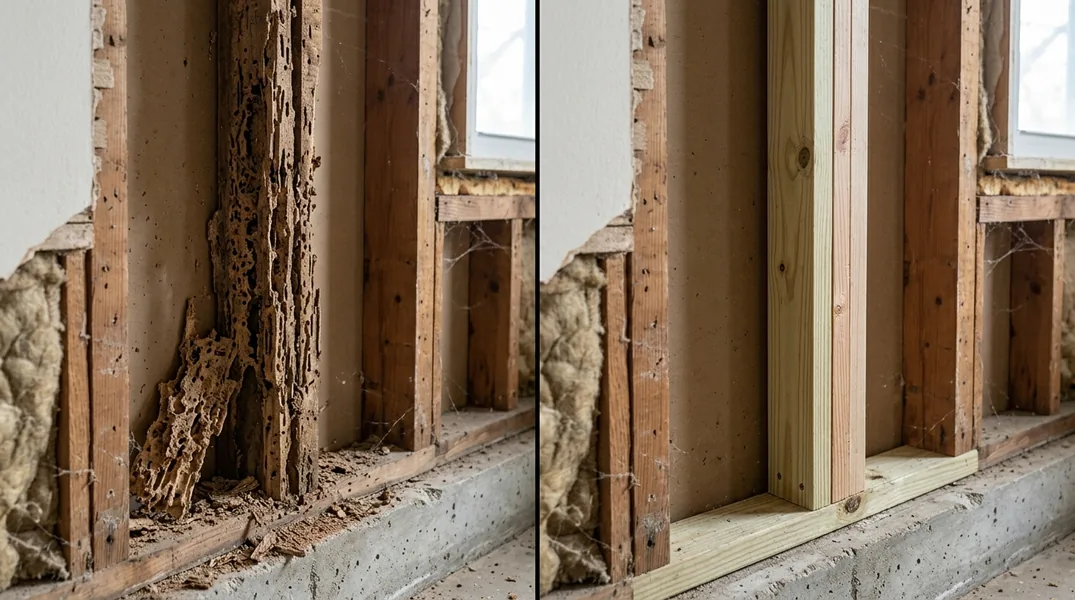
Is Wood Rot Covered by Homeowners Insurance?
One of the most common questions Kansas City homeowners ask us is whether their insurance will cover Wood Rot & Dry Rot Repair. Unfortunately, the answer is almost always no. Standard homeowners insurance policies explicitly exclude wood rot from coverage because it is considered a maintenance issue rather than a sudden, accidental loss.
Insurance companies view wood rot as a preventable problem that results from neglect or lack of proper maintenance. When wood is exposed to moisture over time without being treated or sealed, rot develops gradually. Because the damage occurs slowly and could theoretically have been prevented with proper upkeep, insurers classify it as a homeowner responsibility rather than an insurable event. This distinction is critical to understanding your policy and planning your repair budget.
The only exception to this rule is if wood rot develops as a direct result of a covered peril. For example, if a tree falls through your roof during a storm and causes water damage that leads to rot, your insurance might cover the initial damage from the storm. However, they will not cover the subsequent rot that develops if you delay repairs. This is why acting quickly after any water intrusion is essential for protecting both your home and your insurance claim prospects.
Understanding Termite Damage Insurance Coverage
Like wood rot, Termite Damage Repair is typically not covered by standard homeowners insurance policies. Termite infestations are classified as preventable pest problems, similar to how insurers treat wood rot. Your homeowners insurance assumes that you have a responsibility to maintain your property and prevent pest invasions through regular inspections and preventive treatments.
However, termite damage insurance coverage varies slightly depending on your specific policy and insurance company. Some insurers offer optional pest damage riders or endorsements that you can add to your policy for an additional premium. If you live in an area prone to termite activity, such as many neighborhoods in Kansas City, asking your insurance agent about these optional coverages is worth the conversation. Even if your current policy does not include termite coverage, you may be able to add it before an infestation occurs.
The distinction between coverage and prevention is important. While insurance will not pay for repairs after termite damage, most homeowners insurance policies will cover damage from other causes that might be mistaken for termite damage. If a covered peril like a fire or explosion damages your wooden structure, that damage is typically covered. The key is understanding what your policy actually includes and maintaining regular pest inspections to catch problems early.
Why Insurance Excludes Rot and Pest Damage: The Prevention Principle
Insurance companies operate on a fundamental principle: they cover sudden, unexpected losses that are beyond a homeowner's reasonable control. Wood rot and termite damage do not fit this definition because both conditions develop over time and are largely preventable through proper maintenance and inspections. When you purchase homeowners insurance, you are entering into an agreement where the insurer assumes you will maintain your property in good condition.
Water intrusion is the primary cause of wood rot, and homeowners have several tools to prevent it: regular roof inspections, proper gutter maintenance, prompt repair of leaks, and adequate ventilation in crawl spaces and attics. Similarly, termite prevention involves regular professional inspections, treating soil around your foundation, and maintaining proper drainage away from your home's structure. Because these preventive measures are available and relatively affordable compared to the cost of major rot or termite repairs, insurance companies exclude coverage.
This approach actually protects homeowners in the long run. If insurance covered rot and termite damage, premiums would be significantly higher for everyone, even those who maintain their homes carefully. By excluding these preventable conditions, insurers can keep premiums lower and reserve coverage for truly unexpected events like storms, fires, and accidents.
What to Do If You Discover Wood Rot or Termite Damage
If you discover wood rot or termite damage in your home, your first step should be to document the condition thoroughly with photos and notes about when you first noticed it. This documentation is important if you need to file any insurance claim related to the underlying cause of the damage. For example, if water from a storm caused the rot, your documentation helps support a claim for the storm damage itself.
Next, contact a professional contractor who specializes in structural repairs. Kansas City Carpentry can assess the extent of the damage and determine whether the affected wood needs repair or replacement. Some cases require Floor Joist & Subfloor Repair, while others might need Beam Replacement & Load-Bearing Wall Removal. The scope of work will depend on how much of your home's structure is affected.
Do not delay addressing rot or termite damage. These problems worsen over time and can compromise your home's structural integrity, making repairs increasingly expensive. What starts as a small area of rot can spread throughout your home if left untreated. Similarly, termites continue to consume wood as long as they have access to it. Acting quickly protects your home's value and your family's safety.
Wood Rot & Dry Rot Repair Cost in Kansas City: What to Budget
Because insurance typically does not cover wood rot or termite damage, homeowners must budget for these repairs out of pocket. The cost of repairs varies significantly depending on the extent of the damage, the location of the affected wood, and the complexity of the repair work required. A small area of surface rot on trim might cost just a few hundred dollars to repair, while extensive rot affecting structural beams can run into tens of thousands of dollars.
Several factors influence the final cost of your repair project. The size of the affected area is the most obvious factor, but the location matters too. Rot in an accessible attic is typically less expensive to repair than rot in a foundation or under a concrete slab. The type of wood also affects cost, as replacing structural beams costs more than replacing non-structural trim or siding. Additionally, if the rot has spread to multiple areas of your home, each section requires separate assessment and repair.
To understand what your specific repair might cost, contact Kansas City Carpentry for a free estimate. We can evaluate your situation and provide detailed pricing based on the actual scope of work needed. Our team has experience with wood rot and termite damage throughout the Kansas City area and can explain exactly what repairs are necessary and why.
Protecting Your Home: Prevention and Insurance Planning
While insurance will not cover wood rot or termite damage after it occurs, you can take proactive steps to prevent these problems and protect your investment. Regular home inspections are your best defense. Have a professional inspect your roof, gutters, foundation, crawl space, and attic at least once per year, and more frequently if you live in an older home or an area with high humidity.
Maintain proper drainage around your home's foundation, keep gutters clean and functioning properly, address roof leaks immediately, and ensure adequate ventilation in crawl spaces and attics. These simple maintenance tasks prevent the moisture conditions that lead to rot. For termite prevention, consider annual professional pest inspections and treatments, especially in Kansas City where termite activity is common during warm months.
When it comes to insurance, review your policy annually with your agent and ask specifically about coverage gaps related to wood rot, termite damage, and water intrusion. Some homeowners benefit from adding optional endorsements or switching to policies that offer better protection. If you experience water damage from a covered peril, document everything and file your claim promptly. Quick action on repairs prevents secondary damage like rot that might not be covered.
If you need professional assessment or repair of wood rot or termite damage, Kansas City Carpentry is here to help. Call us at (816) 608-8526 or visit our website to schedule your free estimate today. We serve the entire Kansas City area and can help you understand your repair options and get your home back in good condition.
Looking for a professional carpentry contractor in Kansas City? Kansas City Carpentry responds fast for all your carpentry needs.
Get a Free QuoteOur services: Wood Rot & Dry Rot Repair · Termite Damage Repair · Floor Joist & Subfloor Repair