Why Is My Floor Sagging? Common Causes in Older Kansas City Homes
If you own an older home in Kansas City, you may have noticed your floors aren't quite as level as they used to be. A sagging floor is never cosmetic. It's a warning sign that something structural has gone wrong beneath your feet, and the sooner you understand what's happening, the sooner you can take action.
The most common culprit behind sagging floors is damage to the floor joists, the wooden beams that support your floor system. These joists span between your home's foundation or support beams, and they carry the weight of everything above them: your furniture, appliances, family members, and the floor itself. When joists weaken or fail, the floor loses support and begins to sag. In Kansas City homes, especially those built before the 1980s, the most frequent joist problems stem from three sources: Wood Rot & Dry Rot Repair issues, moisture damage, and Termite Damage Repair needs.
Wood rot develops when wood remains damp for extended periods. Kansas City's humid summers and spring rains create ideal conditions for fungal growth that eats away at the wood's structural integrity. Over time, affected joists become soft and spongy, unable to bear loads. Dry rot, despite its name, also requires moisture to develop and can spread rapidly through a joist system if left unchecked. Similarly, termites silently consume wood from the inside out, leaving joists hollow and weak. Any of these conditions will cause your floor to sag noticeably.
The Role of Foundation Settlement and Beam Failure
Beyond joist deterioration, sagging floors often point to problems with the main support beams or foundation itself. Your home's foundation and support system work together as a unified structure. When the foundation settles unevenly, or when the main beam supporting your floor system weakens, the entire floor can shift and sag. This is particularly common in older Kansas City homes built on clay-heavy soil, which expands and contracts with moisture changes.
Main support beams, typically steel or large wooden posts, can also fail due to rust (in steel beams), wood rot, or inadequate sizing for the load they carry. If a beam has cracked, bent, or deteriorated, it will no longer support the floor joists properly, causing them to sag. In some cases, homeowners have removed or altered load-bearing walls without proper support, which places excessive stress on remaining beams. This is why Beam Replacement & Load-Bearing Wall Removal work must always be done with proper engineering and support.
If you suspect your sagging floor is caused by foundation or beam issues, professional assessment is essential. These problems affect your entire home's structural safety and can worsen rapidly if ignored. Contact Kansas City Carpentry at (816) 608-8526 to schedule a free estimate and have a trained eye evaluate your foundation and support system.
Floor Joist Repair: Sistering Joists and Other Solutions
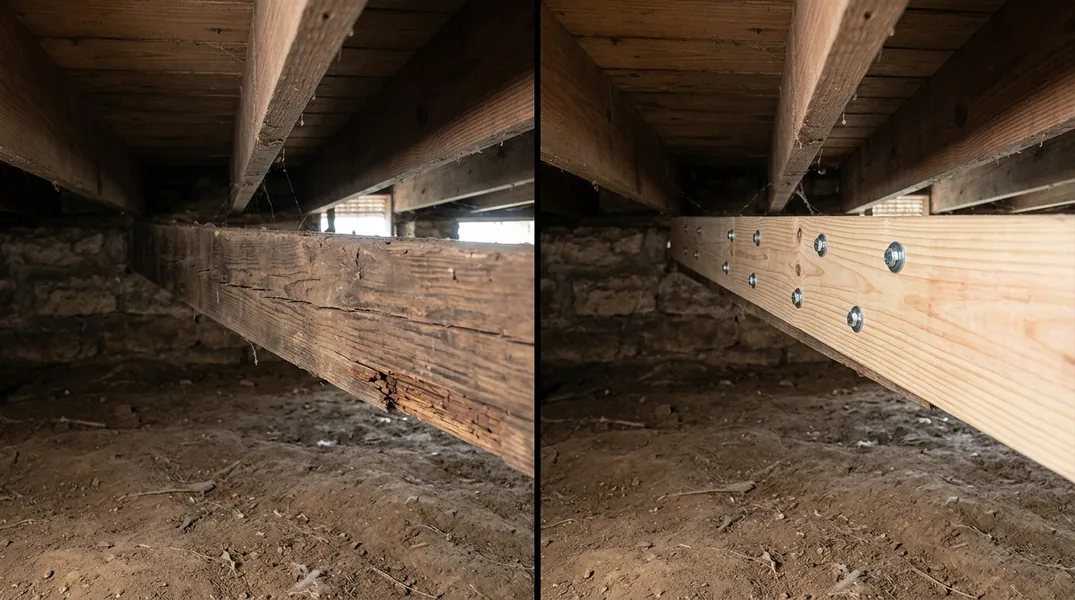
Once you've identified that your sagging floor is caused by damaged joists, you have several repair options. The most common and cost-effective solution for partially damaged joists is sistering, a technique where new lumber is bolted alongside the damaged joist to restore strength and support. Floor Joist & Subfloor Repair professionals use this method when the joist still has some structural integrity but needs reinforcement.
Sistering floor joists involves carefully positioning a new piece of lumber (typically the same dimension as the original joist) next to the weakened one, then securing them together with bolts, nails, or metal plates. This effectively doubles the load-bearing capacity of that section. The process requires precision: the new joist must be properly sized, installed level, and secured at both ends. If done correctly, sistering can extend the life of your floor system for decades and is significantly less expensive than full joist replacement.
In cases where joists are severely rotted or termite-damaged, full replacement may be necessary. This involves removing the damaged joist entirely and installing a new one, a process that typically requires temporary support beams to hold up the floor while work is underway. The scope and cost of replacement depend on how many joists need attention and how accessible they are. Some homes have crawl spaces that make access easier, while others require more extensive work.
Sagging Floor Repair Cost in Kansas City: What to Budget
The pricing for sagging floor repair varies widely depending on the underlying cause, the extent of damage, and the repair method chosen. Sistering a single joist typically costs between $500 and $1,500 per joist, depending on accessibility and the length of the repair. If multiple joists need sistering, costs scale accordingly. Full joist replacement is more expensive, generally ranging from $1,000 to $3,000 per joist, because it involves more labor and temporary support systems.
If your sagging floor is caused by wood rot or termite damage, you may need to address the moisture source or pest problem before repairs begin. This adds to the overall project cost but is essential for preventing future damage. Similarly, if foundation settlement or beam failure is the root cause, those issues must be fixed first, which can significantly increase the total investment. A comprehensive foundation repair or beam replacement can cost $2,000 to $15,000 or more, depending on severity and the size of your home.
The best way to understand your specific costs is to have a professional inspection. Kansas City Carpentry offers a thorough evaluation of your floor system, identifies all problem areas, and provides a detailed estimate for repairs. Call (816) 608-8526 or visit our website to request your free estimate today. During the inspection, our team will explain exactly what's wrong, why it happened, and what your repair options are.
Signs Your Floor Is Sagging and When to Call a Professional
Sagging floors aren't always obvious at first glance. Many homeowners notice the problem gradually, sometimes over years, before recognizing it as a structural issue. Common warning signs include floors that feel spongy or bouncy, visible dips or waves in the floor surface, doors and windows that stick or won't close properly, and cracks in drywall or plaster that appear in diagonal patterns. You might also notice that marbles roll across your floor, or that furniture seems to slide toward one side of a room.
If you notice any of these signs, don't wait. Sagging floors worsen over time, and the longer the underlying problem goes unaddressed, the more expensive repairs become. What might be a straightforward joist sistering job today could become a full structural overhaul if wood rot spreads or foundation damage progresses. Additionally, living in a home with compromised floor structure poses safety risks. A severely sagging floor can eventually collapse, especially if subjected to heavy loads or impact.
Professional assessment is the only way to know for certain what's causing your sagging floor and what needs to be done. Kansas City Carpentry has years of experience diagnosing and repairing floor problems in older homes throughout the region. Our team uses both visual inspection and, when necessary, moisture meters and other diagnostic tools to identify rot, termite damage, and structural failures. We'll provide you with honest, straightforward advice and a realistic timeline for repairs.
Preventing Future Floor Sagging: Maintenance and Moisture Control
Once your floor has been repaired, the best investment you can make is preventing the problem from recurring. Most floor damage in older homes stems from moisture, whether that moisture comes from foundation leaks, plumbing issues, inadequate ventilation, or poor drainage around your home's exterior. By controlling moisture in your crawl space or basement, you dramatically reduce the risk of future wood rot and termite problems.
Start by ensuring your gutters and downspouts direct water away from your foundation. Check your crawl space for standing water, condensation, or signs of dampness. If moisture is present, a vapor barrier or crawl space encapsulation can help. Ensure your home has adequate ventilation, especially in bathrooms and kitchens where humidity is high. Fix any plumbing leaks promptly, and have your foundation inspected annually for cracks or water intrusion. These simple maintenance steps cost far less than major floor repairs and will extend the life of your home's structural components.
If you've recently had floor repairs completed, we recommend annual inspections to catch any new problems early. Kansas City Carpentry is here to help you maintain your home's structural integrity for years to come. Whether you need preventive advice, routine inspections, or emergency repairs, we're just a phone call away at (816) 608-8526.
Looking for a professional carpentry contractor in Kansas City? Kansas City Carpentry responds fast for all your carpentry needs.
Get a Free QuoteOur services: Wood Rot & Dry Rot Repair · Termite Damage Repair · Floor Joist & Subfloor Repair