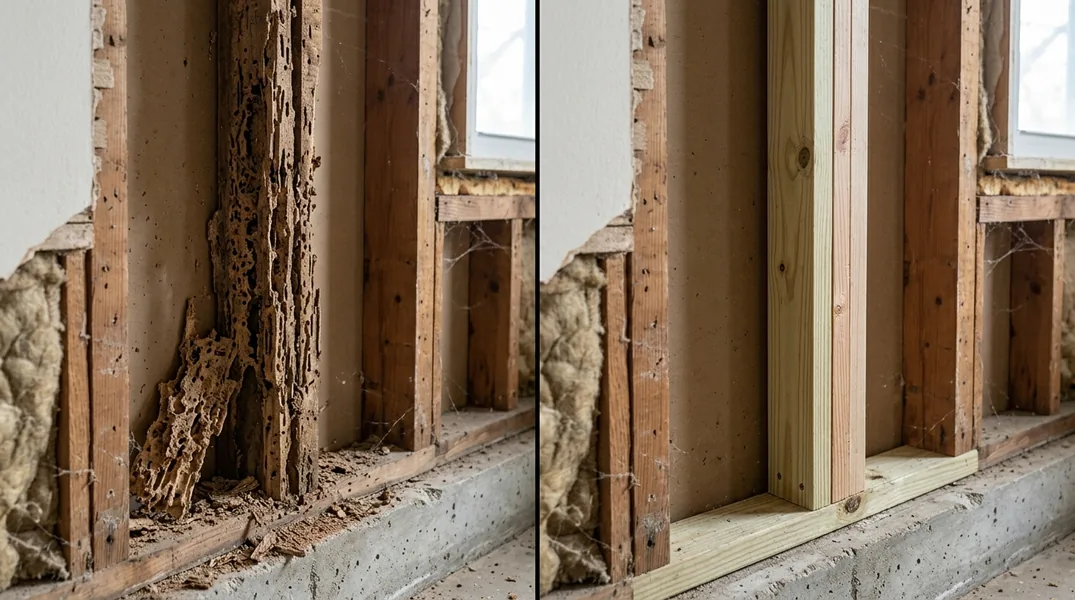
Why Kansas City's Climate Makes Homes Vulnerable to Wood Rot and Termites
Kansas City homeowners face a unique challenge when it comes to protecting their properties from wood damage. The region's climate, characterized by hot, humid summers and freeze-thaw cycles in winter, creates the perfect storm for both wood rot and termite infestations. Unlike drier regions of the country, Kansas City experiences moisture levels that wood-destroying organisms absolutely thrive in.
Wood rot develops when moisture penetrates wood and allows fungi to colonize the material, slowly breaking down its structural integrity. The humid summers in our area mean that basements, crawl spaces, and exterior wood are constantly exposed to high moisture levels. Termites, meanwhile, are attracted to this same environment because they need moisture to survive and reproduce. The combination of warmth and humidity in Kansas City makes the region a prime target for these destructive pests, which is why Wood Rot & Dry Rot Repair and Termite Damage Repair are among the most common services homeowners need in the area.
Understanding the Signs of Termite Damage Before It's Too Late
Many homeowners don't realize they have a termite problem until significant structural damage has already occurred. Signs of termite damage can be subtle at first, which is why early detection is crucial. Some of the most common indicators include hollow-sounding wood, visible mud tubes running along foundation walls, discarded termite wings near windowsills, and small holes in wood surfaces where termites have burrowed through.
Another telltale sign is sagging floors or ceilings, which indicate that termites have compromised the structural wood beneath the surface. You might also notice paint bubbling or peeling from wood, or wood that crumbles easily when you press on it with a screwdriver. If you spot any of these signs of termite damage, it's critical to have a professional inspection performed immediately. The longer an infestation goes unaddressed, the more expensive repairs become. Kansas City Carpentry can assess the extent of damage and recommend the best course of action, whether that involves targeted treatment or structural repairs.
Wood Rot and Dry Rot: Two Threats That Often Work Together
While termites get most of the attention, wood rot is equally destructive and often works hand-in-hand with termite damage. Dry rot, despite its name, actually requires moisture to develop. It occurs when wood moisture content rises above 20 percent, allowing wood-decay fungi to establish themselves. Once dry rot takes hold, it can spread rapidly through structural elements like joists, beams, and wall framing, weakening the entire home's structural system.
The danger with dry rot is that it can progress silently behind walls and under floors for years before becoming visible. By the time a homeowner notices soft spots or discoloration, extensive damage may already exist. Wood Rot & Dry Rot Repair requires identifying and eliminating the moisture source first, then removing damaged wood and replacing it with treated lumber. This is not a do-it-yourself project for most homeowners, as improper repair can compromise your home's structural integrity and lead to much costlier problems down the road.
Critical Areas of Your Home Where Wood Damage Occurs Most Often
Certain areas of your home are more susceptible to wood rot and termite damage than others, and understanding these vulnerable zones can help you stay vigilant. Crawl spaces are particularly problematic because they tend to have poor ventilation and high humidity levels. Basement walls and the areas where wood framing meets the foundation are also common trouble spots. Additionally, any wood that comes into direct contact with soil or is exposed to constant moisture from plumbing leaks, roof leaks, or poor drainage is at elevated risk.
Porches, decks, and exterior trim are especially vulnerable in Independence, Blue Springs, and other areas of the metro region because they're constantly exposed to weather. Wood around windows and doors, where caulk may have failed or gaps have developed, frequently falls victim to rot. Floor Joist & Subfloor Repair is one of the most common services we perform because floor systems are often the first structural elements to show signs of damage. If you notice soft or bouncy floors, or if you see evidence of moisture in your basement or crawl space, these are red flags that warrant professional inspection.
Wood Rot & Dry Rot Repair Near Me: When to Call a Professional
Once you've identified potential wood damage in your home, the next step is determining whether you need professional help. While minor surface rot might seem manageable, structural wood damage is never something to tackle alone. Professional carpenters have the tools, expertise, and experience to accurately assess damage, identify moisture sources, and execute repairs that will last. They also know local building codes and can ensure that repairs meet all safety requirements.
Kansas City Carpentry specializes in comprehensive Wood Rot & Dry Rot Repair services that address both the damage and the underlying causes. Whether you need Floor Joist & Subfloor Repair, Beam Replacement & Load-Bearing Wall Removal, or other structural carpentry work, our team can handle it. We recommend calling for a free estimate if you suspect any wood damage. Early intervention can save thousands of dollars in future repairs and protect your family's safety.
Prevention Strategies That Actually Work in the Kansas City Area
The best approach to wood damage is prevention. Start by controlling moisture in and around your home. Ensure that gutters and downspouts direct water at least four to six feet away from the foundation. Install proper drainage systems in crawl spaces and basements, and use a dehumidifier to keep moisture levels below 50 percent. Seal cracks in foundations, repair roof leaks promptly, and maintain proper ventilation in crawl spaces and attics.
Regular inspections are equally important. Walk your property at least twice a year looking for signs of water damage, pest activity, or wood deterioration. Check under sinks and around bathrooms for leaks. Inspect your roof after heavy storms. Keep wood mulch and landscaping materials at least a foot away from your foundation, as these can create pathways for termites to reach your home. If you live in Lee's Summit or elsewhere in the Kansas City metro area and want professional guidance on prevention, Kansas City Carpentry can provide a thorough inspection and recommendations tailored to your property. Call us at (816) 608-8526 to schedule a consultation today.
Looking for a professional carpentry contractor in Kansas City? Kansas City Carpentry responds fast for all your carpentry needs.
Get a Free QuoteOur services: Wood Rot & Dry Rot Repair · Termite Damage Repair · Floor Joist & Subfloor Repair